who has been tested for cystic fibrosis and is found to be a cystic fibrosis carrier
This letter informs you about the results of the analysis for cystic fibrosis in the newborn screening test that was carried out shortly after your child was born.
The test showed that:
Your child does not have cystic fibrosis and will not develop cystic fibrosis.
Results of the heel prick test for cystic fibrosis
All newborns in Denmark are within 2-3 days of birth analyzed for inherited diseases through the newborn screening test. Your child’s sample was, among other diseases, analyzed for cystic fibrosis. This is an inherited disease that causes pulmonary and nutritional problems.
The test showed that your child is a carrier of a single genetic variation for cystic fibrosis
This means that your child does NOT have cystic fibrosis, but that it is a cystic fibrosis carrier and can pass this on to his or her own child.
How is cystic fibrosis inherited?
Cystic fibrosis is a genetic disease. A child can only develop the disease if he or she has two genetic changes (variants) for cystic fibrosis. Your child has only inherited one variant, and therefore your child does not have cystic fibrosis.
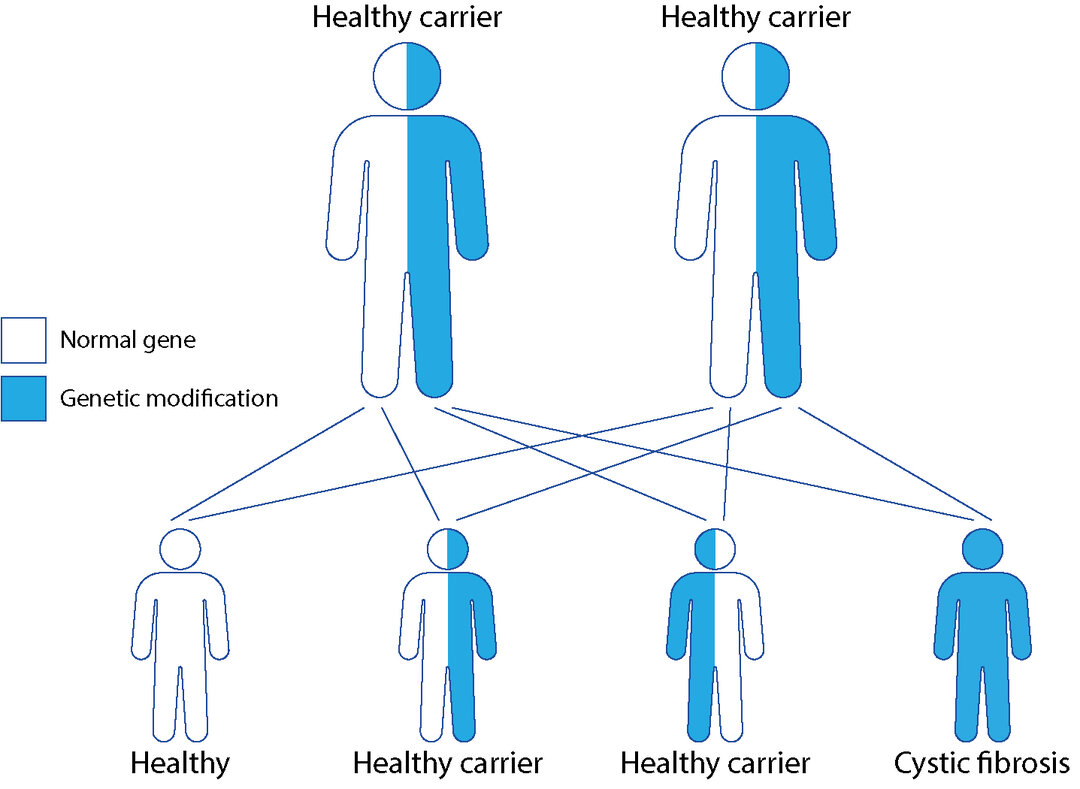
Cystic fibrosis carriers
To be a cystic fibrosis carrier is not associated with disease. Your child does not have cystic fibrosis and will not need treatment, but your child carries a variant for cystic fibrosis. This is called being a healthy carrier of cystic fibrosis.
You need to be aware of:
The main reasons for informing you about your child being a cystic fibrosis carrier are:
- Increased risk in future pregnancies: If you wish to have more children, it is important that you know that the risk of having a child with cystic fibrosis is slightly increased for you as compared to other parents.
- Increased risk for your child having children with cystic fibrosis: Your child could pass on their genetic variation to their own children. Your child should therefore, before considering pregnancy, be informed that he or she is a carrier and referred to genetic counseling.
- Increased risk for your family: When your child is a cystic fibrosis carrier, other members of your family have an increased risk of being carriers as well. Thus, your relatives have an increased risk of having a child with cystic fibrosis. We encourage you to inform your family members of this.
Genetic counseling for carriers of cystic fibrosis
Should you or your family members have any questions or if you wish additional analyses to clarify who is a cystic fibrosis carrier, we encourage you to be referred to the local department of clinical genetics through your general practitioner. This is especially important if you plan a new pregnancy.