Laboratory of Reproductive Biology (LRB) was founded by Dr. Hannah Peters back in 1959 and has a long tradition for studying reproductive biology. Initially LRB was part of the Finsen Laboratory at The Finsen Institute, but in 1983 the laboratory moved to the University Hospital of Copenhagen and became integrated in the Juliane Marie Center for Women, Children and Reproduction.
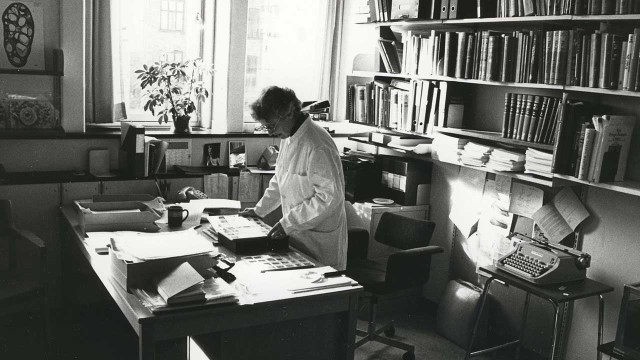
Dr. Hannah Peters in her office at Laboratory of Reproductive Biology
Up until the 1980's, the focus of the laboratory was primarily basic research in the structure and function of the gonads, and establishment and disruption of the germ cell migration during the embryonic development. In the early 80's the Danish IVF program was established in collaboration with doctors at Rigshospitalet and LRB. For more than a decade, LRB performed the laboratory work of the IVF treatment, until the Fertility Clinic at Rigshospitalet opened in 1995. Continuing the work on improving the treatment strategies of IVF, the laboratory established a new technique for fertility treatment of HIV positive patients, and soon after, the laboratory established a clinical setup for cryopreservation of ovarian tissue in women in 1999. The procedure allows fertility preservation for girls and young women suffering from a malignant disease that requires treatment with chemo- and/or radiotherapy. And since 2010 cryopreservation has also been offered to young boys suffering from cancer or cryptorchidism.

Professor Anne Grete Byskov and Professor Claus
Yding Andersen was both involved in the initial IVF setup at Rigshospitalet,
and later on Professor Andersen implemented ovarian cryopreservation at
Laboratory of Reproductive Biology.
Laboratory of Reproductive Biology is the only place in Denmark that focuses solely on basic and translational science within reproductive biology. Our research has always focused on clinical research and activities in reproduction with the aim to improve the options for fertility treatment and fertility preservation.
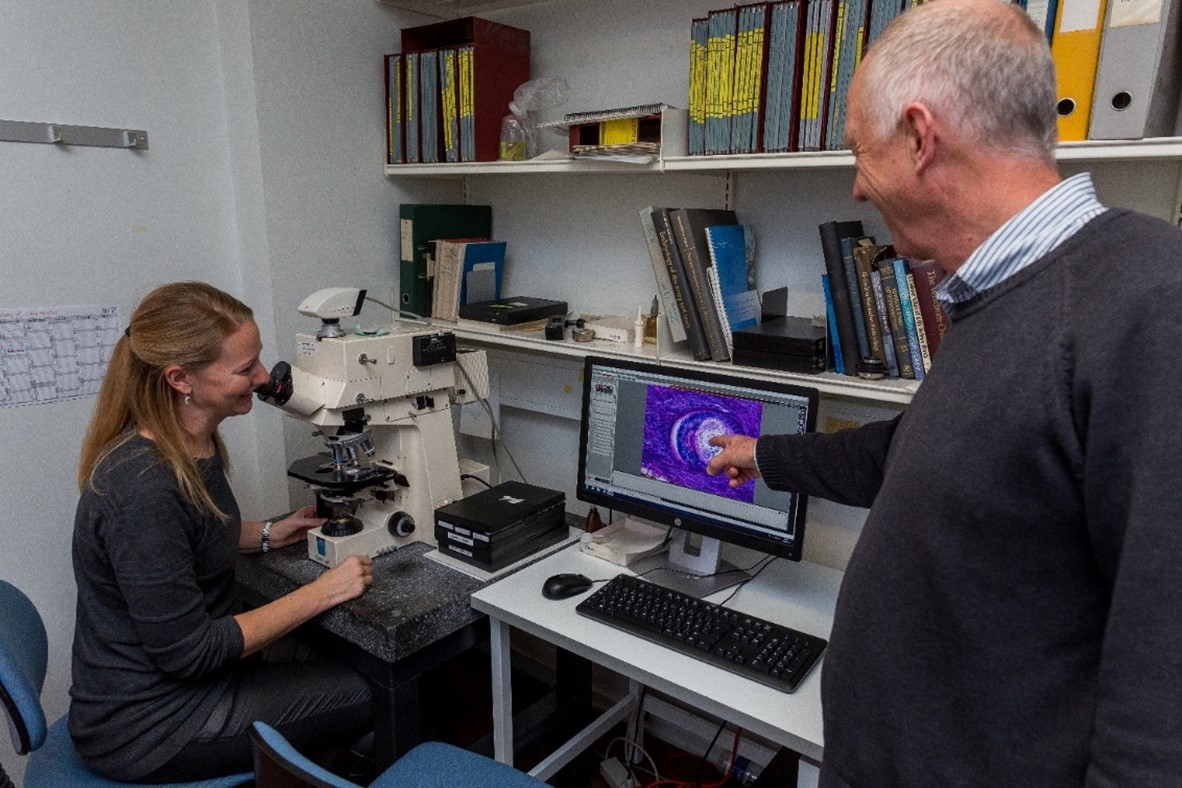
Dr. Stine Gry Kristensen and Professor Claus
Yding Andersen investigating human folliculogenesis.
Since the establishment of LRB nearly 70 years ago, the laboratory has been a lighthouse for scientists interested in the field of reproductive biology. Since the 1970's, the laboratory has hosted annual international workshops regarding the development and function of the ovary. This has led to many international collaborations and research activities around the world.
Throughout the years, Laboratory of Reproductive Biology has been headed by dedicated scientists, all of which have contributed significantly to the field of reproductive science.
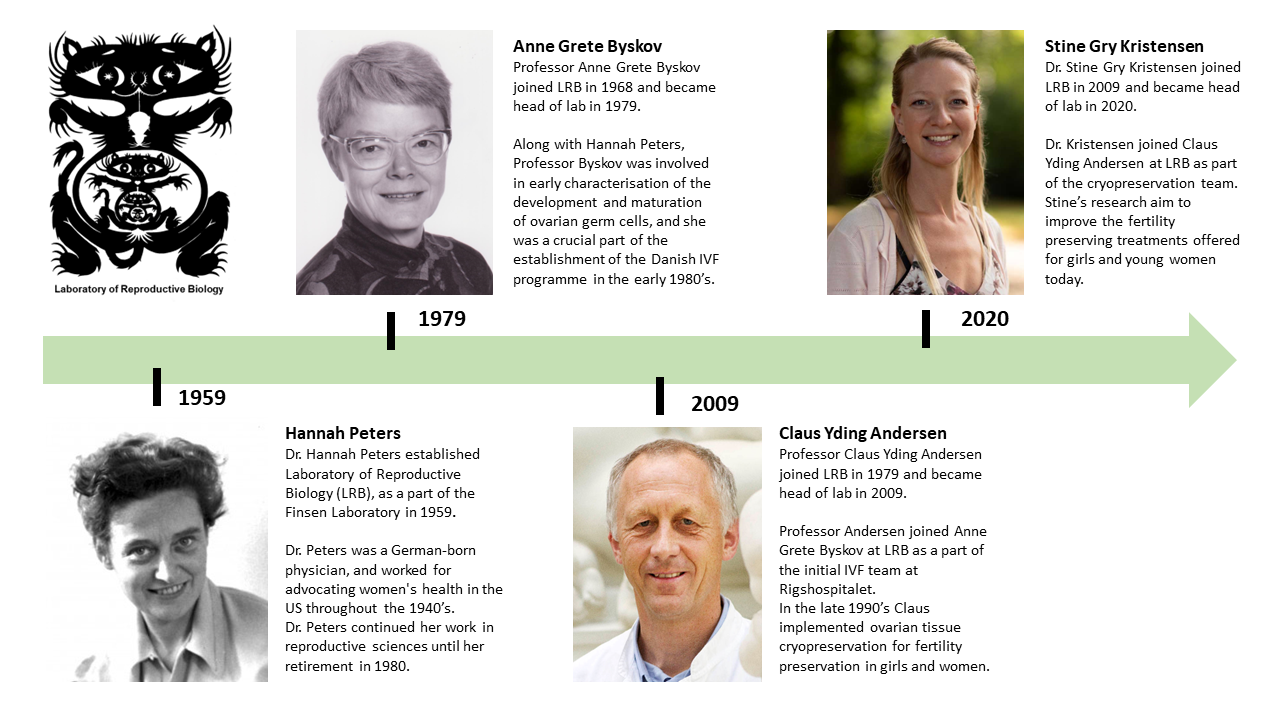
Timeline of the head of laboratory scientists at
Laboratory of Reproductive biology.