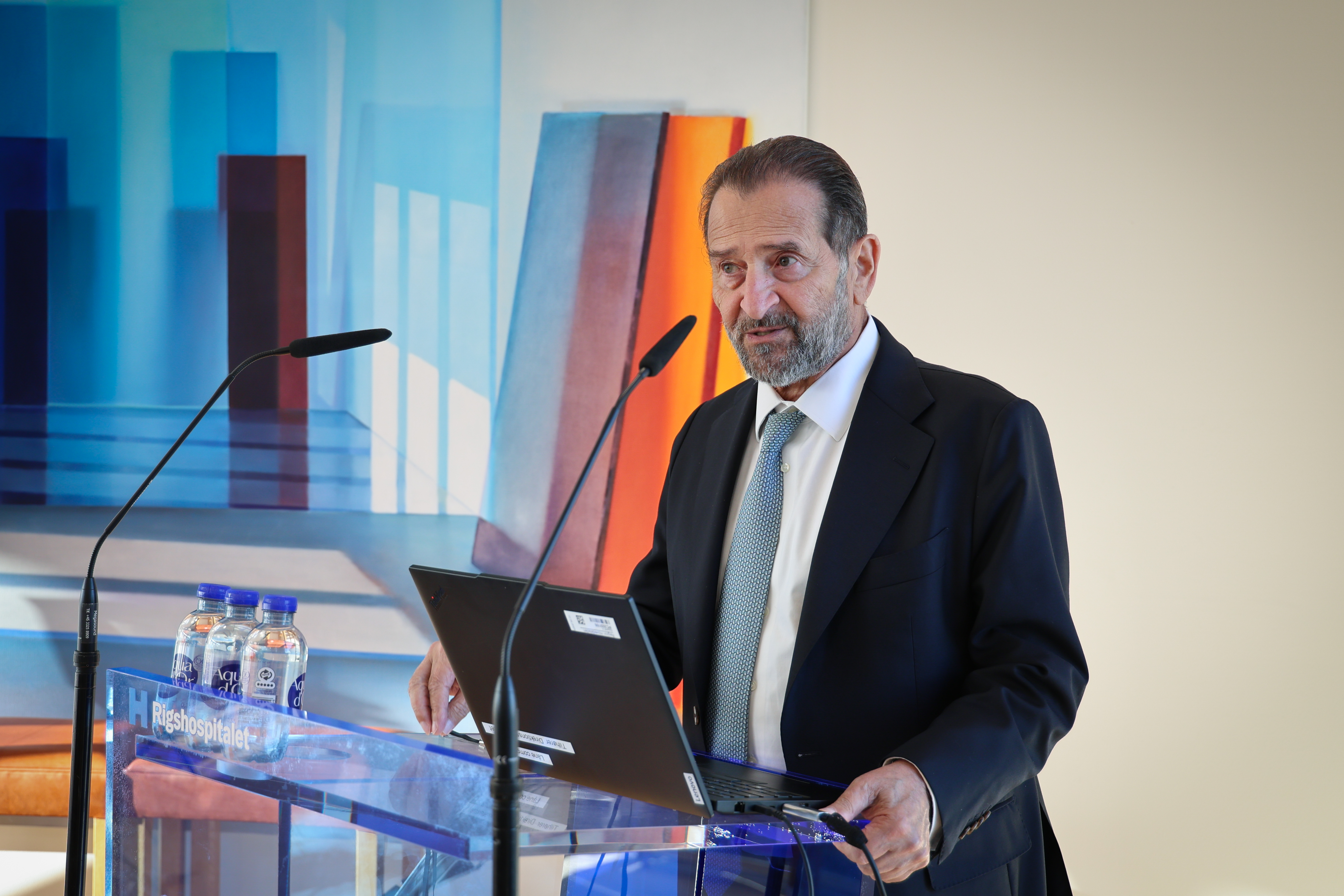
Professor Kypros Nicolaides received the KFJ Award at a ceremony at Rigshospitalet on 4 November.
From the moment a pregnancy test shows two lines until new parents hold their newborn baby in their arms, pregnancy is a nine-month period of waiting and hoping that everything will go well. If complications arise, research has given healthcare professionals better tools to identify risks early and intervene to protect both mother and baby.
One of the researchers who has driven this progress is Greek-Cypriot professor Kypros Nicolaides from King’s College London. He founded the Fetal Medicine Foundation, which works to advance and promote research and methods in fetal medicine. Over several decades, he has contributed to the international development of new methods for examining and treating unborn babies and pregnant women. At the same time, he has established a close collaboration with researchers at Rigshospitalet.
He is now receiving Rigshospitalet’s KFJ Award, which is presented to an international researcher with close ties to the hospital’s research community.
– This is a great honour for me, especially because of my great love and admiration of Danish doctors for their enormous scientific and clinical contributions to the advancement of fetal medicine. Denmark was the first country in the world to introduce first-trimester screening for Down syndrome and more recently, first trimester prediction and prevention of pre-eclampsia, says award recipient Kypros Nicolaides.
The award totals DKK 1.75 million. Of this amount, DKK 250,000 goes directly to Nicolaides, while the remainder will fund research at Rigshospitalet or in close collaboration with the hospital.
Better screening and prevention
Professor Kypros Nicolaides was nominated by consultant Charlotte Kvist Ekelund, Professor Olav Bjørn Petersen and Professor Anja Pinborg from the Department of Fertility, Gynaecology and Obstetrics, together with consultant Line Rode from the Department of Clinical Biochemistry.
In their nomination, they highlight his impact on both research and clinical practice:
– Professor Kypros Nicolaides has had a fundamental influence on the development of maternal-fetal medicine. His long-standing collaboration with Rigshospitalet has contributed to the development of prenatal screening and pregnancy research in Denmark and continues to generate research with direct clinical relevance. We believe that he is an outstanding recipient of the KFJ Prize and that the award would further strengthen a collaboration dedicated to improving the health of women and children during and beyond pregnancy.
When asked which research achievements he himself is most proud of, Nicolaides points, among other things, to the development of fetal blood sampling and blood transfusions for anaemic fetuses in the 1980s.
– Also in the 1990s, the measurement of fetal nuchal translucency revolutionised antenatal care. Women are now examined at 12 weeks of gestation for the early diagnosis of many major fetal abnormalities. This early assessment of pregnancy has subsequently led to the development of strategies for prediction and prevention of pregnancy complications, such as pre-eclampsia, fetal growth restriction, and stillbirth. Another important development in the early 1990s was endoscopic laser surgery for the treatment of severe twin-to-twin transfusion syndrome resulting in the survival of many babies that were previously dying from this pregnancy complication, says Kypros Nicolaides.
Among the many other advances in the field, Nicolaides highlights the development of cell free DNA testing of maternal blood for non-invasive accurate diagnosis of major chromosomal abnormalities. He also points to research into preterm birth and the surgical treatment of severe fetal abnormalities.
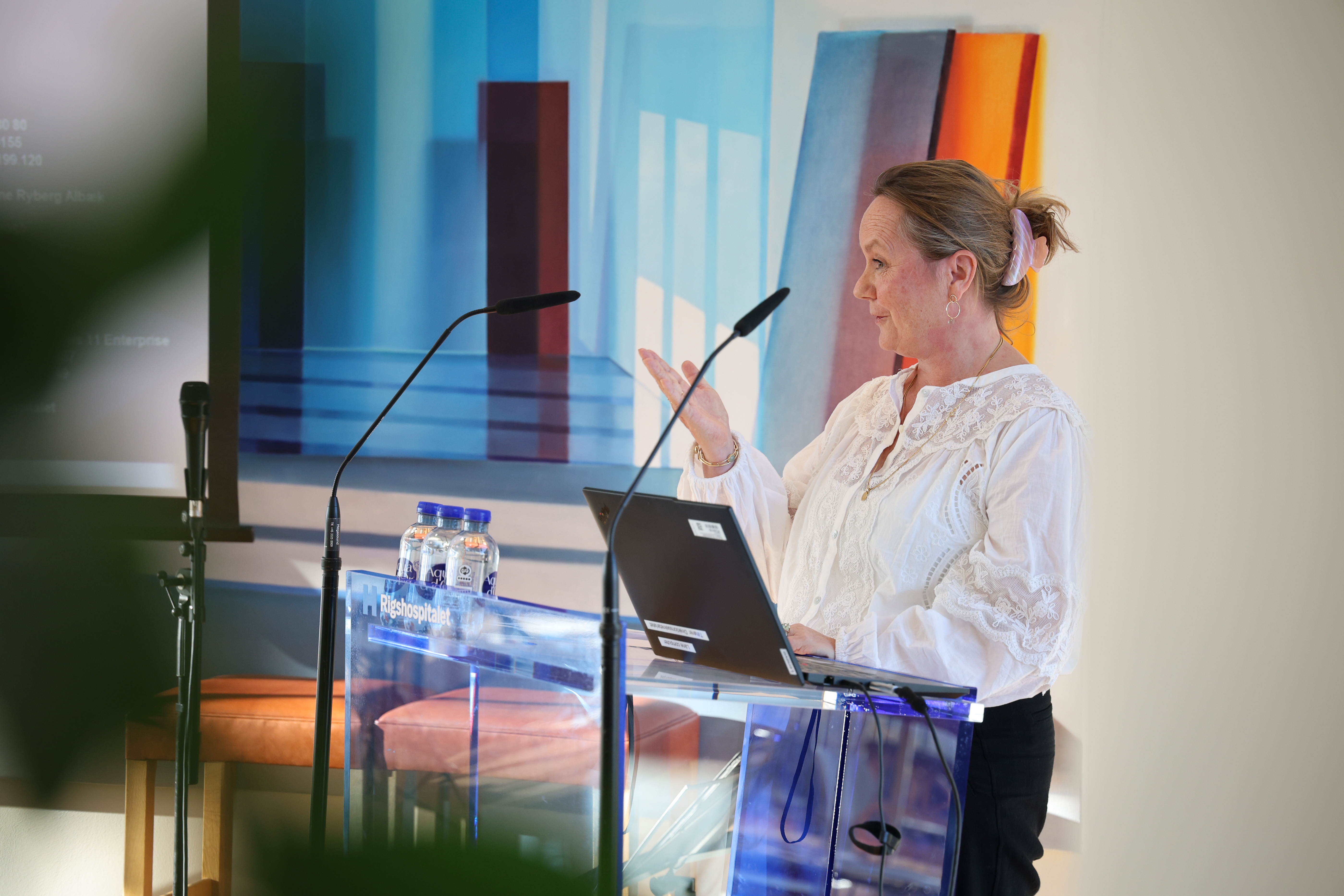 Consultant Charlotte Kvist Ekelund nominated Kypros Nicolaides for the KFJ Award together with three colleagues.
More than 25 years of collaboration
The collaboration between Nicolaides and Rigshospitalet began more than 25 years ago with the development of first-trimester screening as part of antenatal care in Denmark. Since then, the collaboration has expanded across specialties and has resulted in 25 joint scientific publications.
– My collaboration with Rigshospitalet was of critical importance leading to widespread international uptake of new methods of prediction and prevention of pregnancy complications. Widespread clinical implementation of first-trimester screening for chromosomal abnormalities and early prediction and prevention of pre-eclampsia, which are now carried out in most countries of the world, would not have been possible had it not been the research of Danish doctors who provided validation of our early research findings, says Kypros Nicolaides.
Today, the researchers are investigating, among other things, how pregnancy complications affect women’s long-term health. They are also exploring the use of artificial intelligence in fetal medicine and prenatal diagnosis.
The KFJ Award will enable the researchers to build on their collaboration. Nicolaides already has plans for how the research funding will be used.
– All the funding will be given to doctors in Rigshospitalet to support collaborative research projects both for early prediction of pregnancy complications and postnatal care of women with pregnancy complications, says Kypros Nicolaides.

The award ceremony concluded with a musical performance by MusikBeriget, including The Beatles classic ‘Here Comes the Sun’, which was a perfect match for the sunny weather outside.