The first lymphoma patient in the world was injected with a micro-dose of the drug glofitamab at the Phase 1 Unit at Rigshospitalet in 2017. Even at very low doses, all visible disease disappeared on the patient's scan image, and last year the glofitamab drug was approved for patients with lymphoma at a dosage 2,000 times higher than that first dose in 2017.
Approval was preceded by five or six years of fast-track development, during which Danish patients had access to one of the winner drugs in experimental cancer treatment.
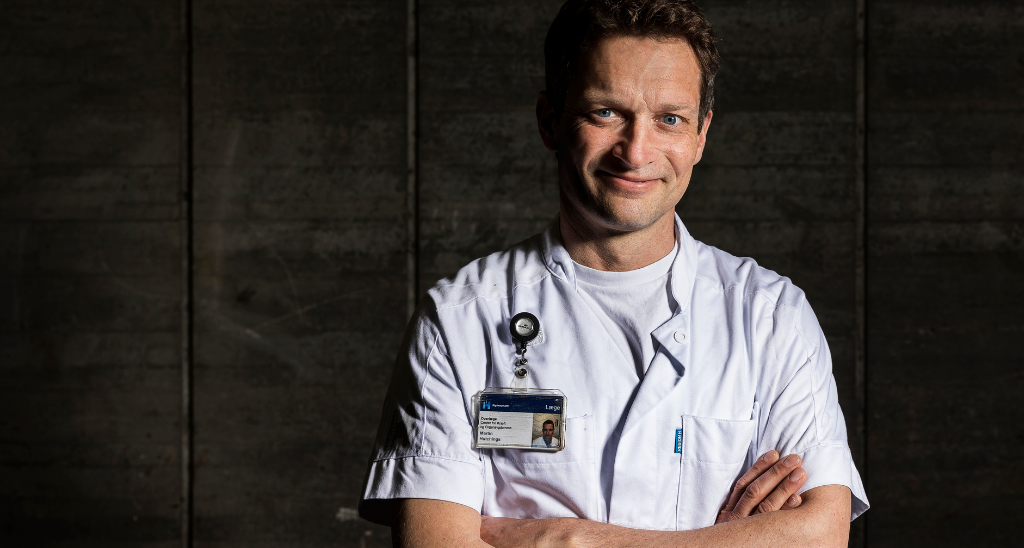
So-called bispecific antibodies like glofitamab best encapsulate what it would mean for patients, especially those with cancer-related blood diseases when, a decade ago, Rigshospitalet's haematology section of the Phase 1 Unit opened for early trials of new drugs. The head of the unit, Professor Martin Hutchings, a consultant at the Department of Haematology, explains:
"Many more patients with haematologic diseases (blood disorders) have access to new, innovative treatments because we have such a well-functioning unit. So far, five-six of the drugs we have helped test have become approved drugs for patients with lymphoma and bone marrow cancer," says Martin Hutchings.
Accelerating the trials engine
The line between standard treatment and experimental treatment has become more blurred in recent years.
"We sit at routine morning conferences while we're running trials of new, experimental treatments. For the individual patient, this allows us to find the right, tailored combination of both standard and experimental treatments," he says.
There are currently 15-20 haematology phase 1 studies underway, with drugs that could potentially be future treatment breakthroughs. Some drugs are quickly discarded after trials of perhaps just six months and on only a few patients, because they are not good enough. If, like glofitamab, a drug shows good potential, Martin Hutchings and his colleagues accelerate their trials engine.
"When that happens, we inevitably move many patients onto the drug. So even though many drugs never make it past phase 1, the vast majority of our patients receive drugs that show an early effect," says Martin Hutchings.
Handpick trials
Since 2017, more than 300 haematology patients have participated in early trials at Rigshospitalet. Typically because they do not respond to standard treatments. There could have been many more, but Martin Hutchings often turns down pharmaceutical companies that want to test new drugs.
"When we choose which drugs to test, the industry gives us unique access to a wide range of scientific data from cell lines, monkeys and mice. We therefore handpick the trials that we consider have the greatest potential. It's important for the quality of new medicines that we clinicians can influence their development. The Phase 1 Unit gives us this opportunity," says Martin Hutchings.
Right now, his best bet for the winner drugs of tomorrow are the next generations of CAR-T immunotherapy or the so-called protein degraders, which are designed to destroy the signaling molecules that are crucial for cancer cell survival. These drugs are also being tested in phase 1 on Danish patients.