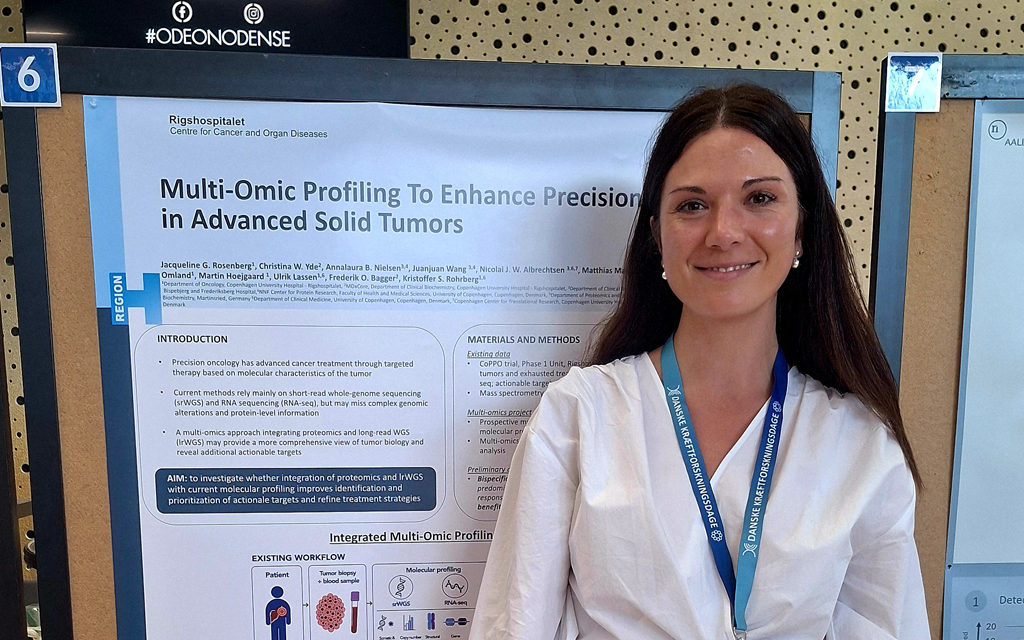
Long read whole genome sequencing and proteomics
Jacqueline G. Rosenberg, MD and PhD student at the Phase 1 Unit, presented her PhD project investigating how multi-omics profiling can support precision oncology for patients with advanced solid tumors. The project, which is done in collaboration with MDxCore and Dept. of clinical Biochemistry at Bispebjerg Hospital, combines long-read whole genome sequencing and proteomics with existing molecular profiling to provide a more comprehensive understanding of tumor biology and improve the identification of actionable therapeutic targets.
The project builds on Copenhagen Prospective Personalized Oncology (CoPPO) project, which includes over 4,800 patients with advanced solid tumors and molecular profiling by short-read wholegenome sequencing and RNA sequencing and proteomics data available from over 3,000 corresponding tumor samples. Ongoing prospective enrollment adds proteomics and long-read whole-genome sequencing to current molecular profiling.
Preliminary results from 14 patients treated with a bispecific CEA–CD3 T-cell engager showed enrichment of immune and inflammatory pathways in patients with stable disease, with strong concordance between RNA sequencing and proteomics. The findings suggest that the two approaches may provide complementary biological information.
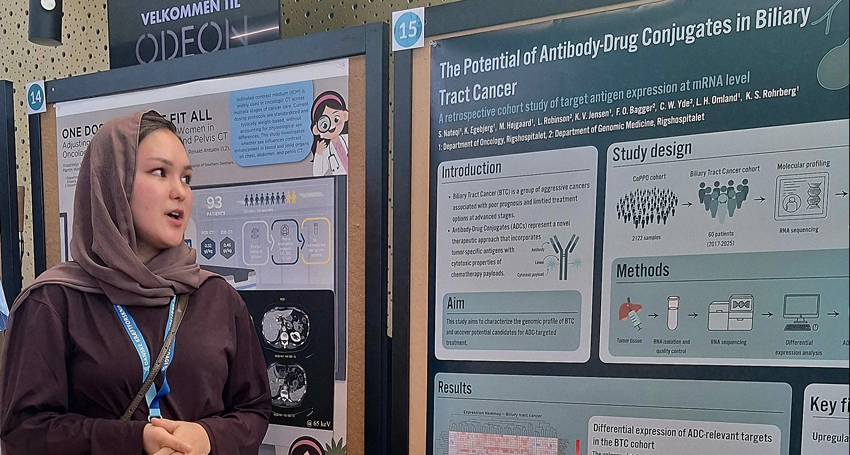
RNA sequencing to guide ADC choice
The conference also provided an opportunity to present ongoing research on the potential of antibody-drug conjugates (ADCs) as a treatment option for biliary tract cancer. Sediga Nateqi presented results from her master's thesis, a project exploring targeted treatment approaches in which antibodies are used to selectively deliver therapeutic drugs to cancer cells.
With personalized medicine as one of the key themes of this year's conference, both projects highlight the potential of molecularly guided treatment strategies to improve patient selection and support more individualized cancer care.
Beyond presenting research, the conference was a valuable opportunity to exchange ideas, discuss findings with colleagues, and gain inspiration from cancer research across Denmark. The strong emphasis on collaboration, personalized medicine, and individualized patient pathways highlighted the importance of bringing research and clinical practice together to improve cancer care throughout the patient journey.