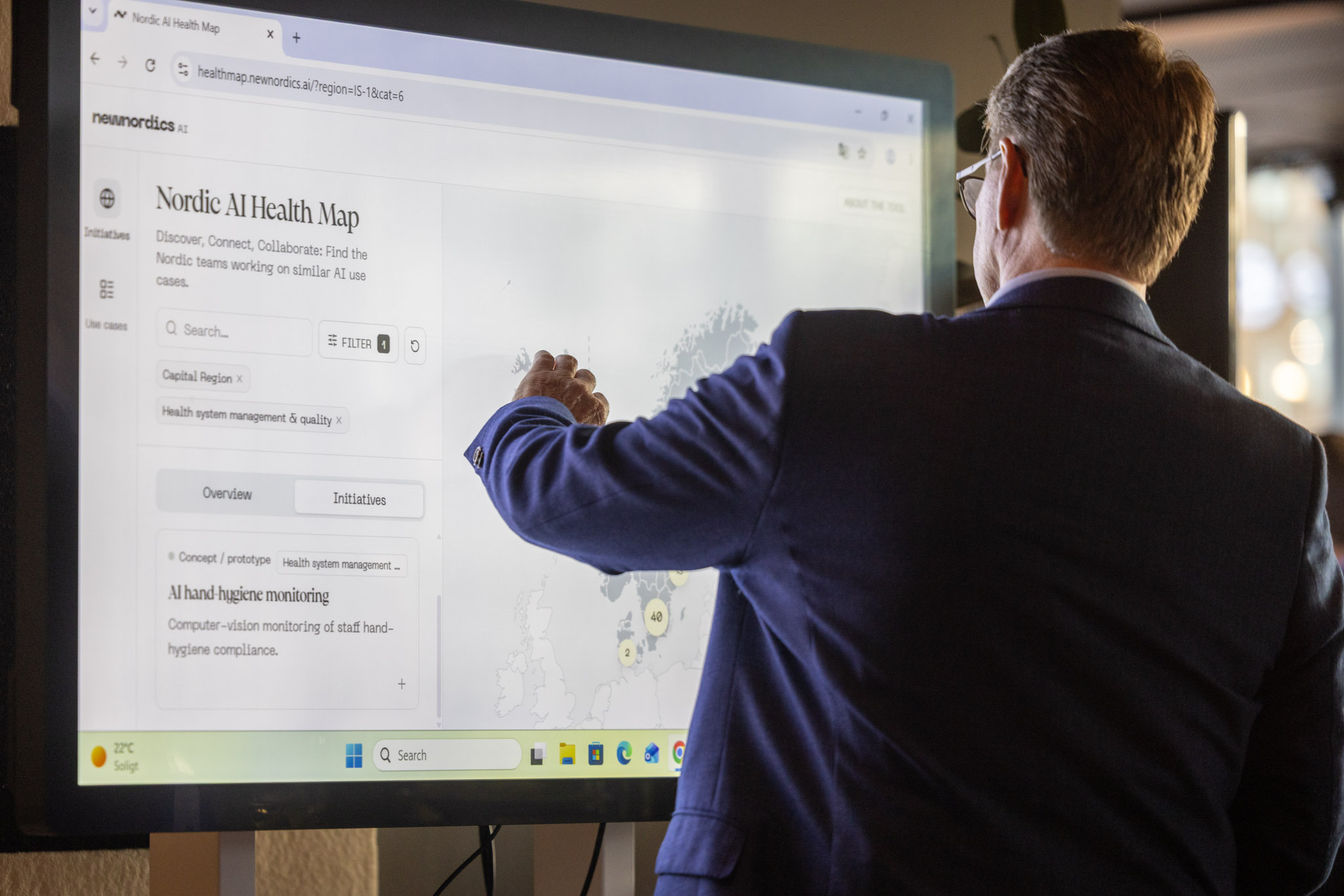
Photo: Liza Simonsson
When around 250 leaders, decision-makers and experts from the Nordic and Baltic countries and the EU gathered at Karolinska University Hospital in Stockholm on 25–26 August, the Nordic University Hospital Alliance (NUHA) took an important step forward in its collaboration on artificial intelligence in healthcare.
The first Nordic AI conference for university hospitals provided a meeting place for sharing experiences and a platform for further collaboration.
Responsible use
The conference was organised by the Nordic Council of Ministers and focused on how artificial intelligence can move from individual projects to responsible use at scale – creating tangible value for patients, staff and society.
University hospitals have a particular role to play because they combine highly specialised treatment with research, innovation and education.
The conference therefore focused less on the technology itself and more on how AI can be implemented in a safe, effective and sustainable way.
– AI is going to significantly transform healthcare, and we have an important task ahead of us in making the most of the opportunities the technology offers. For me, it is first and foremost about what this can mean for patients. If we can use AI to detect disease earlier, make more accurate diagnoses, tailor treatment and give our staff more time with patients, we have an opportunity to improve the quality of healthcare in ways that patients can actually feel, says Malene Fischer, Research Director at Rigshospitalet, adding:
– This is a potential we need to seize, and that requires us to be ambitious while also working closely together to bring AI safely and effectively into everyday clinical practice.
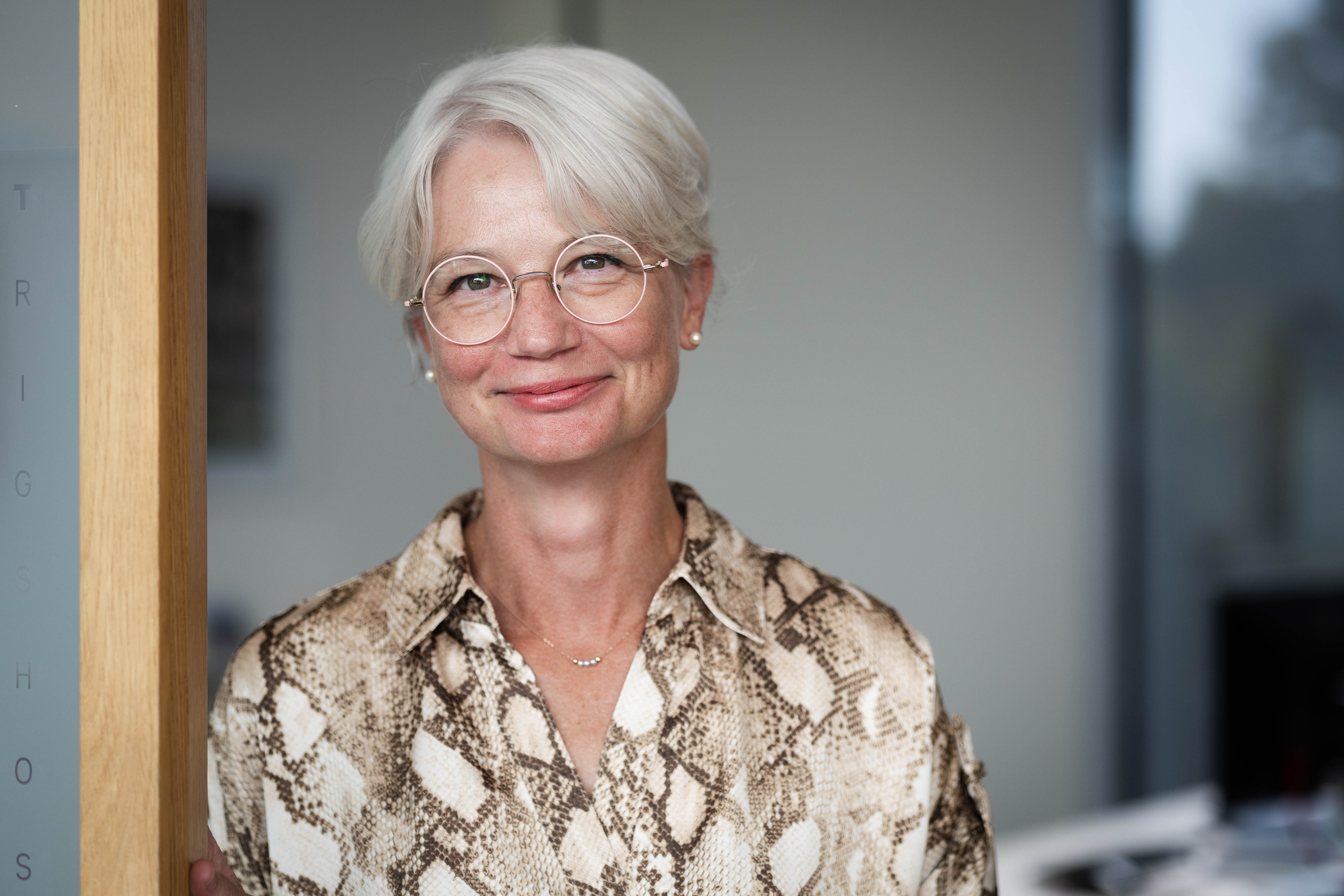 Malene Fischer, Research Director at Rigshospitalet.
This collaboration will take place, among other things, through the Nordic University Hospital Alliance (NUHA), which brings together the five Nordic university hospitals in Copenhagen, Stockholm, Oslo, Helsinki and Reykjavik, and of which Rigshospitalet is a member.
Rapid development
A recurring theme at the conference was the need to move from individual AI initiatives to solutions that can be used more widely in clinical practice.
– It is not about developing AI for the sake of technology itself. The question is what value AI creates for patients, healthcare and society. We therefore need to move from individual pilot projects to solutions that can be used widely in clinical practice. Technology and knowledge are developing rapidly. The real challenge is agreeing on ethical and legally sound ways of working that enable us to use AI responsibly in healthcare, says Annemieke Ålenius, Senior Adviser at the Swedish eHealth Agency and AI Sweden.
Participants were presented with concrete examples from university hospitals where AI is already being used in clinical practice, as well as experiences from organisations that are at an earlier stage of their AI journey.
One clear message was that the technology itself is not the biggest challenge. For AI to have a real impact, the right conditions for implementation, clear leadership, and structures for governance, monitoring and collaboration are also needed.
Major initiatives
Nordic collaboration is particularly relevant at a time when AI is developing rapidly and the EU is pursuing major initiatives and introducing new regulation, including the AI Act.
The Nordic countries share a number of favourable conditions for developing and using AI in healthcare. These include a high level of trust in public institutions, extensive health data, well-developed digital systems and a long tradition of collaboration between healthcare, research and the public sector.
By bringing together experience and perspectives from several countries, the Nordic region can have a stronger voice in European developments. An important question at the conference was therefore how the Nordic countries can jointly contribute to the implementation of the AI Act while creating favourable conditions for innovation and the responsible use of AI in healthcare.
International perspectives
The conference also had a clear international perspective. Among the keynote speakers was Saila Rinne, Head of Artificial Intelligence in Health and Life Sciences at the EU AI Office, who spoke about European AI policy and the implementation of the AI Act.
From Canada, Muhammad Mamdani, Professor and Director at the University of Toronto, shared experiences from Canada’s work with AI in healthcare and the implementation of new solutions in clinical practice.
Together with the experiences of the Nordic university hospitals, these international perspectives contributed to a broad discussion of how healthcare can benefit from AI while ensuring that requirements for patient safety, ethics, legislation and quality are met.